


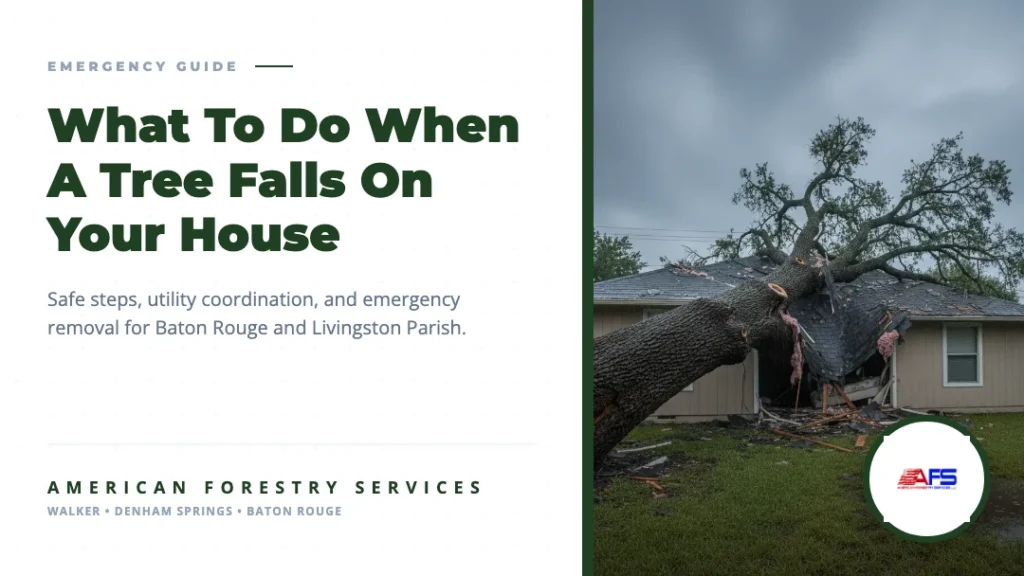
Louisiana has weathered nine federally-declared major weather disasters in the last 25 years, and Livingston Parish has been inside the declaration footprint for every single one (FEMA Disaster Declarations, 2024). That single fact reframes tree care in Walker. This isn’t pretty pruning. It’s resilience work in a hurricane belt that has flooded, blown over, and rebuilt itself more times than most American counties ever do.
American Forestry Services is the only major arborist business headquartered in Walker, and we run on a 2nd-generation family operation that knows Henderson Lane, Magnolia Beach, and every back road from Albany to French Settlement. This guide is what we wish every Walker, Livingston, Watson, Albany, French Settlement, Denham Springs, Port Vincent, and Killian homeowner knew before they hire a tree service: costs, permits, hurricane prep, live oak care, and the questions to ask before anyone touches your trees.
TLDR:
- American Forestry Services is the only major arborist headquartered in Walker, LA, serving Livingston Parish’s 47,014 households across a 703-square-mile parish (U.S. Census QuickFacts, 2020).
- Louisiana requires a Louisiana Department of Agriculture & Forestry (LDAF) arborist license for any fee-based tree work, verify your hire holds one before signing anything (LDAF Horticulture Commission, 2025).
- Livingston Parish sits inside the federal-disaster-declaration belt. Hurricane Ida (2021), the August 2016 flood, and seven other major events in 25 years mean tree care here means hurricane-belt care.
- Live oaks, Louisiana’s state tree, can live several hundred years and define Walker’s residential canopy. Topping or storm-rushed removal of a 200-year-old oak is irreversible.
Why Hire a Tree Service Based in Walker, LA?
In 2020, the U.S. Census Bureau counted 47,014 households across Livingston Parish, with 81.8% of them owner-occupied and spread over 703 square miles (U.S. Census QuickFacts, 2020). That works out to roughly 55 homes per square mile, most with mature trees, most owned by the people deciding when those trees get worked on. A Walker-based arborist gets to your driveway faster than a Baton Rouge operator routing across I-12, and we already know the clay soils, the live oak inventory, and the storm history every block of this parish has lived through.
American Forestry Services rolls out of 29980 Henderson Lane every weekday morning. We’re tree service in Walker, LA for the same reason we’re Livingston Parish tree service, because Jeremy Vaughn’s family has been working trees in this part of south Louisiana long enough that the older live oaks on his routes are the same ones his father pruned a generation ago.
Local matters here in ways it doesn’t in a denser metro. When a tree comes down on a Watson driveway at 6:00 a.m., you don’t want a dispatcher 40 miles away routing a crew that’s never seen your subdivision. You want the truck that already turns down your road on a normal Wednesday.
It also matters for credentials. American Forestry Services is BBB Accredited with an A+ rating (earned September 2024) and operates under an active Louisiana Department of Agriculture & Forestry arborist license. Those aren’t decorative. They’re what tells you a tree service is the real thing.
What Tree Services Do Walker & Livingston Parish Homeowners Need Most?
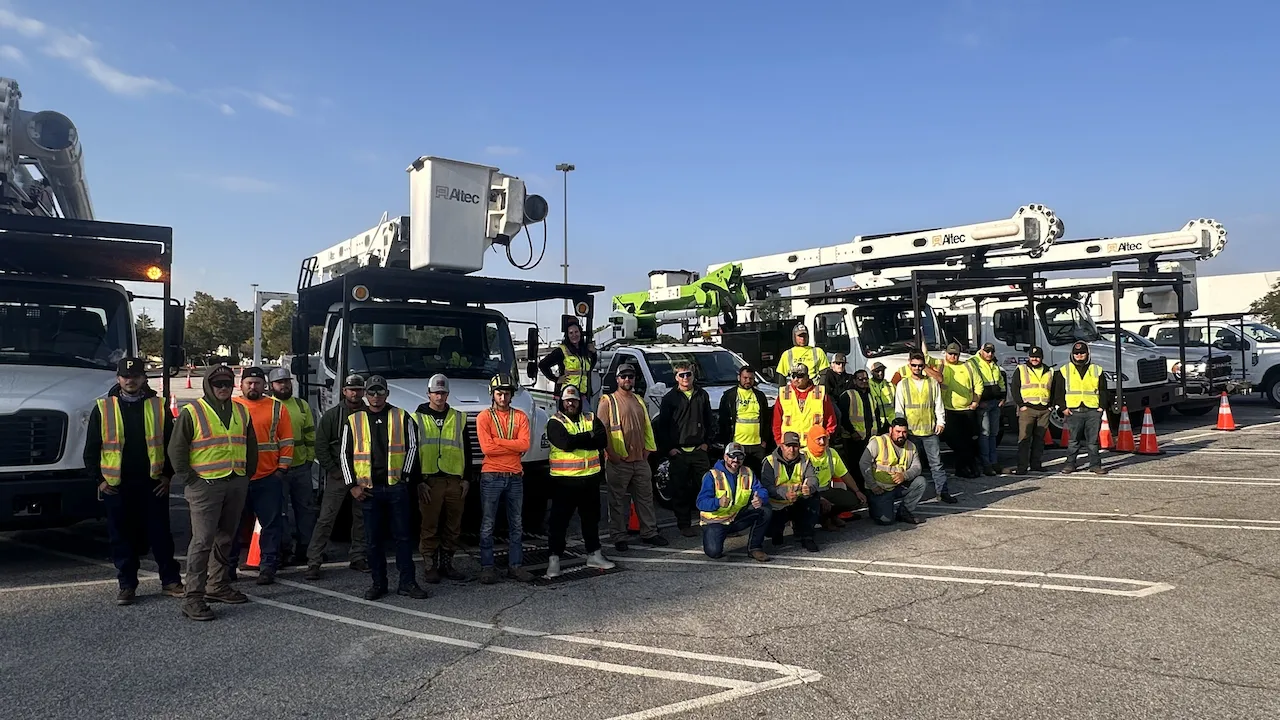
Eight services cover roughly every call we take from residential homeowners in Livingston Parish: tree removal, tree trimming, stump grinding, lightning protection, crane work, fertilization, tree health inspection, and cabling or bracing for storm-stressed trees. The mix shifts seasonally: removal and emergency response spike after hurricanes, pruning peaks in winter dormancy, and fertilization in early spring, but the eight categories stay constant.
Here’s the quick read on each:
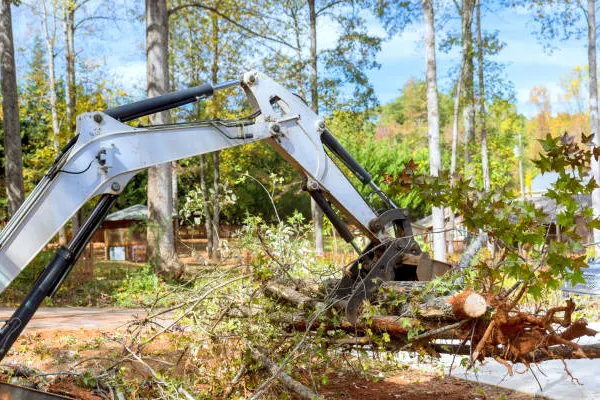
- Tree removal, the most common request, especially after storms. Includes complete take-down, debris haul-off, and stump grinding as a paired service.
- Tree trimming, structural trimming for safety and shape, done to ANSI A300 standards. Not topping.
- Tree pruning, selective branch removal for health, structure, and clearance from buildings or power lines.
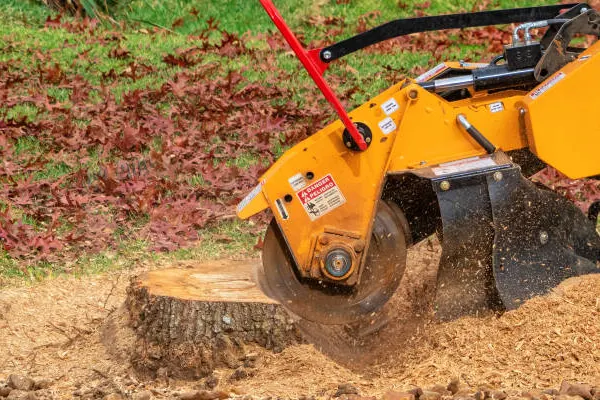
- Stump grinding, what happens after the removal. Below-grade grinding so you can resod or replant.
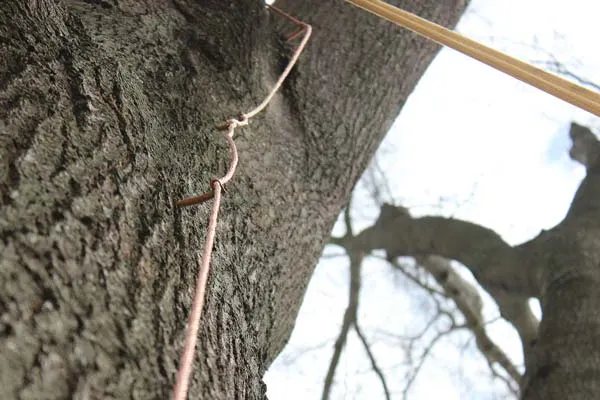
- Lightning protection, copper cable systems on heritage live oaks and pecans. AFS ranks #1 in Baton Rouge for this work and is one of only two operators in the metro that lead with it.
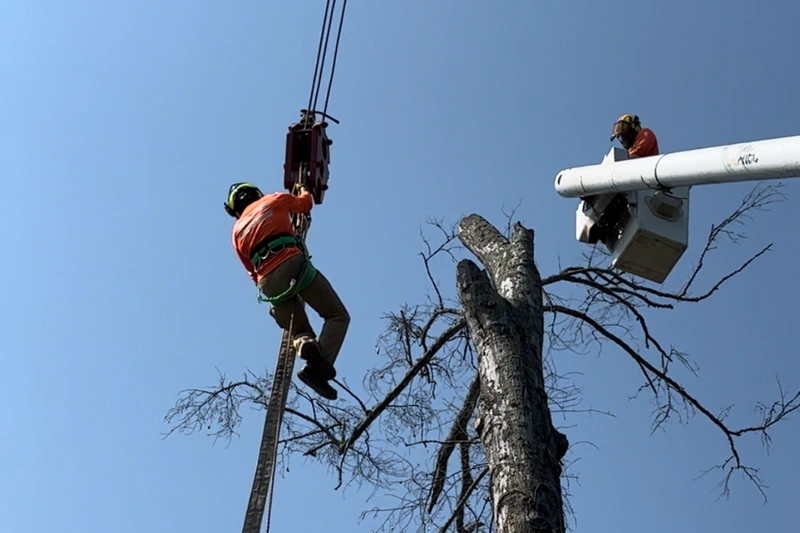
- Crane services, for tight-access removals where rigging from the ground is unsafe or impossible.
- Tree health inspection, the diagnostic visit. We tell you what your trees actually need before anyone touches them.
- Tree cabling and bracing, for trees with structural weaknesses that don’t need to come down yet.
What’s notable about that list is what’s not on it. We don’t sell things we don’t do. We don’t take portable-toilet contracts, we don’t run festival sanitation, and we don’t sub out the work to a national broker after we sell you. The crew that quotes the job is the crew that does the job.
How Much Does Tree Service Cost in Walker & Livingston Parish?
National tree removal averages around $750, with a typical range of $200 to $2,000, according to HomeAdvisor’s 2025 cost guide. Livingston Parish residential prices land in line with that national benchmark, though heritage live oaks and crane-required removals push higher, and routine pruning on smaller trees comes in lower. The honest answer to “how much will this cost?” is that we won’t quote you sight-unseen, accurate pricing requires looking at access, lean angle, proximity to structures, and what’s overhead.
Some of the cost variables that matter most in this parish:
- Tree height and trunk diameter, a 60-foot pine removal isn’t the same job as a 30-foot crape myrtle.
- Access, can a chip truck pull into your yard, or are we hand-carrying everything to the curb?
- Proximity to structures, anything within 20 feet of a roof or fence needs rigged take-down, not felling.
- Crane requirement, adds equipment cost but often saves on labor hours for complex jobs.
- Stump grinding, usually quoted as an add-on, priced per inch of stump diameter.
For a detailed breakdown of the variables that move tree removal cost up or down in Walker and Baton Rouge, see our deeper guide on what affects tree removal cost in Walker and Baton Rouge. For an actual quote on your trees, the fastest path is the free estimate form. We’ll come look, and the quote is honest because we’re the ones standing under the tree.
Do You Need a Permit to Remove a Tree in Livingston Parish?
For most private-property tree removals in unincorporated Livingston Parish, you don’t need a permit. The rules tighten when the tree is in the public right-of-way, on municipal property, inside an incorporated city’s limits (Walker, Denham Springs, Watson, Albany), or close enough to utility lines that the work crosses an easement. HOA covenants can also add restrictions even when the parish doesn’t.
The general decision tree looks like this:
- Tree on your private lot, away from utilities and structures? Usually no permit needed in unincorporated Livingston Parish.
- Tree in the right-of-way (between your sidewalk and the street)? The parish or municipality owns or co-owns that tree, call before you cut.
- Tree touching power lines? Coordinate with Entergy or your local utility first. They’ll often handle removal at no cost when the tree threatens their infrastructure.
- Tree in Walker, Denham Springs, Watson, or Albany city limits? Check with the city office, incorporated municipalities can have ordinances that the unincorporated parish doesn’t.
- HOA neighborhood? Read your covenants. Many require board approval for removal of trees over a certain caliper, especially heritage species.
When in doubt, call the parish or municipal office before you cut. A removal that violates a setback, easement, or HOA rule is far more expensive than the 10-minute phone call it takes to confirm.
If your tree is dead, leaning, or storm-damaged and you think it’s an emergency, that’s different, most jurisdictions have an expedited path for hazard trees. American Forestry Services can help you document the hazard for the file.
How Livingston Parish’s Storm History Shapes Tree Care
Louisiana has had at least nine federally-declared major weather disasters in the last 25 years, Hurricane Ivan (2004), Katrina (2005), Rita (2005), Gustav (2008), Ike (2008), the August 2016 flood, Hurricane Laura (2020), and Hurricane Ida (2021), and Livingston Parish has been inside the federal disaster footprint for every one (FEMA Disaster Declarations, 2024). Tree care in this parish isn’t a luxury maintenance category. It’s resilience work in a hurricane belt that has flooded, blown over, and rebuilt itself more times than most American counties ever do.
Two events define the modern era for trees in this parish specifically. Hurricane Ida came ashore in August 2021 with a federal Major Disaster Declaration covering Livingston Parish for both individual assistance and debris removal (FEMA Disaster DR-4611-LA, 2021). The other was the August 2016 flood, not a hurricane, but a 25.52-inch rainfall over three days at the Livingston station that flooded roughly 19,500 buildings in the parish, about half of all parish homes (NWS LIX August 2016 Flood Summary, 2016).
The 2016 flood’s tree story is one that doesn’t make the news. Prolonged inundation kills root systems on a delay. Trees that survived the immediate event with green canopies started showing decline in 2018, 2019, and into the early 2020s, root rot, oak decline, gradual canopy thinning that ended in delayed mortality two to five years after the water receded. We’ve removed trees in Denham Springs and Walker neighborhoods whose root systems never recovered from the August 2016 inundation, even though the trees looked fine for years afterward.
What this means practically for Walker and Livingston Parish homeowners:
- Pre-hurricane-season audit. Late April through May is the right window to walk your property with an arborist, identify dead or weakly-attached limbs, and decide what needs to come down before peak season.
- Post-storm triage. The first 24 hours after a major storm are about safety, not aesthetics. A leaning tree near a house is an emergency. A snapped pine in the back forty isn’t.
- Long-tail flood damage. If your property was inside the 2016 flood footprint and you have mature trees showing canopy thinning now, that’s worth a tree health inspection, not a casual look.
For a deeper guide on what to do when winter storms or cold snaps damage your trees, see our piece on winter tree emergencies and when to call a professional.
Caring for Walker’s Live Oaks
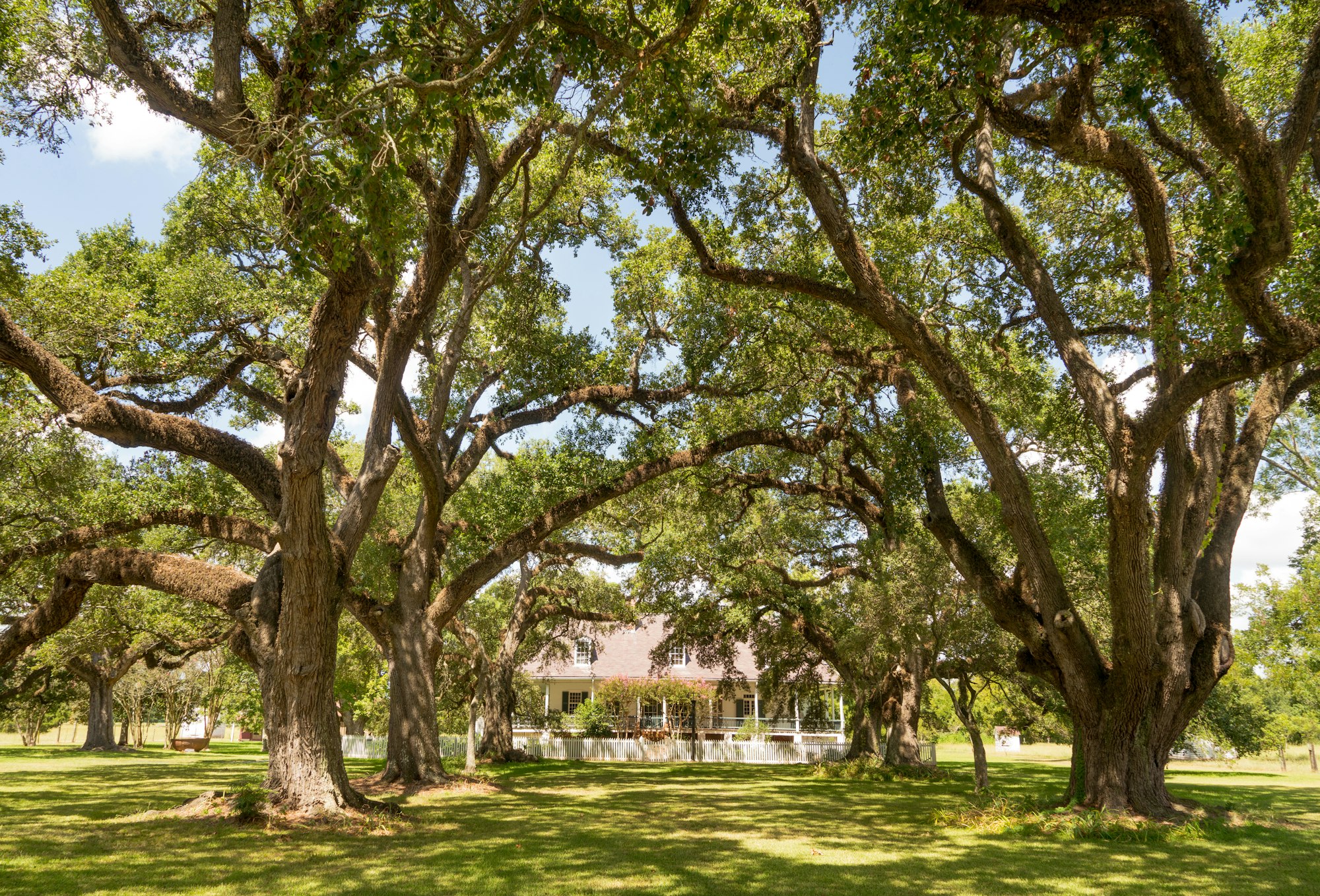
The live oak (Quercus virginiana) is Louisiana’s state tree and can live several hundred years, the Seven Sisters Oak in nearby Mandeville is estimated at 500 to 1,000 years old (LSU AgCenter, 2020). Most Walker neighborhoods built between the 1950s and the 1990s have live oaks in the 50-to-150-year age range, and those trees do more for property value than almost any other improvement on the lot. Treating a heritage live oak the way you’d treat a Bradford pear is the kind of mistake that can’t be undone.
Three rules cover most live oak care decisions in this parish:
- Trim only in winter dormancy. December through February is the right window for live oak pruning in south Louisiana. Summer trimming risks transmission of oak wilt, a fungal disease spread by sap-feeding beetles, and avoiding it is a non-negotiable in any professional pruning calendar.
- Never top a live oak. Topping (sometimes sold as “hat-racking” or “shaping”) removes the tree’s upper canopy and forces weak regrowth from the cut points. It looks tidy for one season and then produces a structurally unsound tree for the rest of its life. Every major arborist standard, ANSI A300, ISA, TCIA, rejects topping. Real tree pruning is selective, structural, and proportional to the tree’s biology.
- Consider lightning protection for heritage oaks. A copper cable lightning protection system runs a few thousand dollars on a mature live oak. The replacement cost for the tree, if lightning kills it, is incalculable. You can’t buy a 200-year-old live oak.
For more on Louisiana’s live oak culture and the specific challenges of older trees in our parishes, see our piece on the majestic live oaks of White Castle, White Castle is downriver, but the species pressures are similar.
How to Vet a Tree Service in Walker, LA
Before you hire any tree service in Livingston Parish, verify three things in this order: an active LDAF arborist license, a current certificate of insurance covering both general liability and workers’ compensation, and a real local presence, not just a forwarded phone number routed from somewhere else. If a contractor can’t produce all three, walk away.
Here’s the full vetting checklist we’d run if we were the homeowner:
- License verification. The Louisiana Department of Agriculture & Forestry issues arborist licenses to anyone doing fee-based tree work in the state. Licensing requires a $150 examination, 70% passing score, $125 annual renewal, and ongoing continuing education (LDAF Horticulture Commission, 2025). Ask for the license number and verify it on the LDAF website.
- Insurance certificate. Request a current Certificate of Insurance (COI) showing both general liability (usually $1M minimum) and workers’ compensation coverage. Without workers’ comp, a worker injured on your property can sue you directly.
- Local references. Ask for three local references with phone numbers, not just online reviews. A real local operator can give you neighbors. A storm chaser can’t.
- Written estimate with scope. The estimate should specify the trees by location, the work scope (removal, trim, stump grind), debris haul-off included or not, and total price. No verbal-only quotes.
- BBB and Google review history. Look for at least 12 months of review history with consistent volume. A profile with three reviews in one week and nothing before is a red flag.
Red flags that should end the conversation immediately:
- Door-knocking crews showing up after a storm with no business card, no truck signage, and a “today only” discount
- Demand for full cash payment upfront before any work begins
- No written contract, just a handshake
- A phone number that rings to someone who has no idea what trees they’re quoting

What Areas of Livingston Parish Does American Forestry Services Cover?
American Forestry Services serves Walker (our HQ), Livingston, Watson, Albany, French Settlement, Denham Springs, Port Vincent, and Killian, covering essentially all of Livingston Parish, plus the East Baton Rouge Parish line and into St. Tammany when crane jobs require it.
Each of those communities has its own character and its own tree inventory. Walker and Denham Springs have the densest residential canopy and the most call volume. Watson and Albany have larger lots with more mature live oaks and pecans. French Settlement, Port Vincent, and Killian have the wetlands-edge tree mix where cypress and tupelo live alongside the upland species. We’ve worked all of them.
For commercial properties and multi-tenant buildings, HOAs, apartment complexes, retail centers. We run scheduled maintenance contracts in addition to one-off calls. Twenty-four-hour emergency response is part of every service area we cover, because in hurricane country it has to be.
American Forestry Services keeps Walker-based crews, Walker-based trucks, and a 24-hour line for what hurricane season throws at Livingston Parish. If you’ve got trees that need looking at, or one that just came down, get an honest quote from the only major arborist headquartered in this parish.
https://americanforestryservices.com/free-estimate/
Or call us directly at (225) 955-0369.
Common Questions About Tree Service in Walker & Livingston Parish
These are the questions Walker and Livingston Parish homeowners ask American Forestry Services most often before booking a job. Each answer is grounded in either a Louisiana-specific source or our two-generation field experience in this parish.
How much does tree removal cost in Walker, LA?
National tree removal averages around $750 with a typical range of $200 to $2,000 (HomeAdvisor 2025 cost data). Pricing in Walker and Livingston Parish lands in that range and depends on tree size, accessibility, and proximity to structures. We won’t quote you sight-unseen, accurate pricing requires looking at the tree.
Do I need a permit to remove a tree in Livingston Parish?
Most private-property tree removals in unincorporated Livingston Parish don’t require a permit. Trees in the right-of-way, on municipal property inside Walker or Denham Springs city limits, or close to utility easements trigger separate processes. HOA covenants can add restrictions. When in doubt, call your parish or city office before cutting.
When should live oaks be trimmed in Louisiana?
Winter dormancy, December through February, is the safe trimming window for live oaks in south Louisiana. Avoid summer trimming because of oak wilt transmission risk; the fungal disease spreads through sap-feeding beetles that are active in warm months. Topping a live oak is never appropriate regardless of season.
Is American Forestry Services licensed and insured?
Yes. American Forestry Services holds an active Louisiana Department of Agriculture & Forestry (LDAF) arborist license plus current general liability and workers’ compensation insurance (LDAF Horticulture Commission, 2025). We’re also BBB Accredited with an A+ rating earned in September 2024.
Do you respond to emergencies after a hurricane?
Yes, 24-hour emergency response is a core capability, and it’s one of the reasons we keep crews and trucks locally based in Walker rather than routing out of Baton Rouge. After a major storm, response priority goes to homes with trees on structures first, then driveway and access clearing, then non-emergency removals.
The Bottom Line
Tree service in Walker and Livingston Parish isn’t a generic category you can shop on price alone. It’s hurricane-belt work in a parish where 47,014 households sit across 703 square miles, where the live oak canopy defines property value, and where every storm of the last 25 years has left tree damage in its wake. The arborist you hire should know that, and should be able to prove it with an LDAF license, current insurance, and a local truck that actually rolls out of this parish.
American Forestry Services is the only major arborist headquartered in Walker. We’re 2nd-generation. We’re BBB Accredited A+ since 2024. And we’ll come look at your trees and give you an honest quote, start with a free estimate from American Forestry Services or call us at (225) 955-0369.