



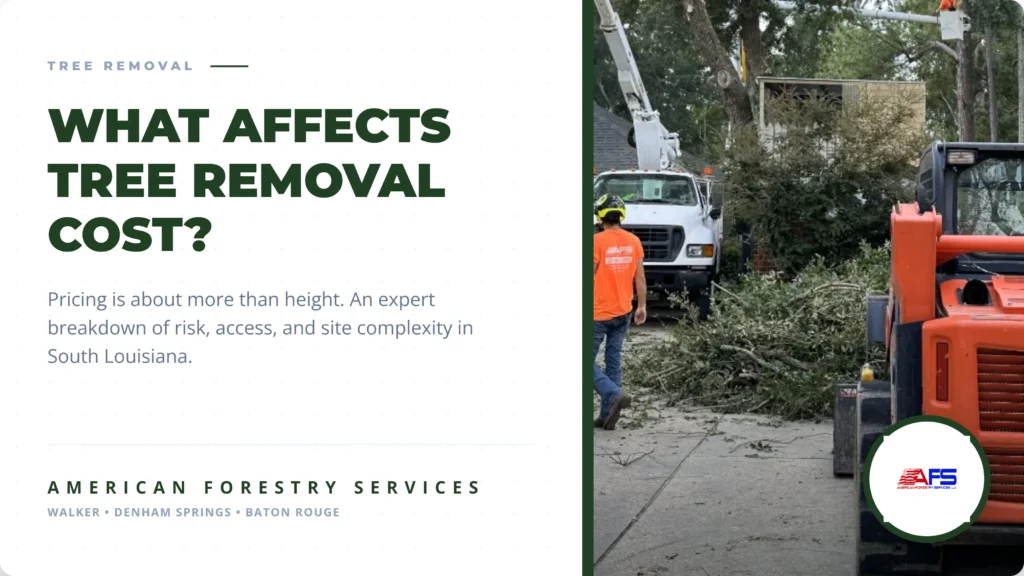
The Main Factors That Change Tree Removal Cost in Baton Rouge
Quick Answer: At American Forestry Services, we price tree removal based on the tree’s size and condition, how close it is to structures, how difficult the site is to access, what equipment the job requires, and how much cleanup is involved. Storm-damaged trees, crane work, emergency response, and stump grinding can all affect the total cost. The most accurate price comes from an on-site estimate.
TLDR: What Changes Tree Removal Cost?
- Tree size and condition affect labor, rigging, and safety planning
- Trees near homes, fences, driveways, and utility lines usually take more time and care
- Tight access can change how we remove the tree and what equipment we need
- Crane work can increase the scope but reduce risk on complex removals
- Storm-damaged trees often require slower, more controlled work
- Cleanup, hauling, and stump grinding can change the final price
- The best quote comes from an on-site assessment, not a blind phone estimate
If you are trying to budget for tree removal in Walker, Baton Rouge, Denham Springs, or the surrounding area, the main thing to know is this: tree removal is not priced solely by height. We look at the tree, the property, the access, and the safest way to complete the work. A healthy tree in an open yard is a very different job from a damaged tree over a roof, fence, or driveway.
Need help with a hazardous or unwanted tree? Call us at (225) 955-0369 or request a free estimate.
Tree Removal Pricing Comes Down to Risk, Access, and Scope
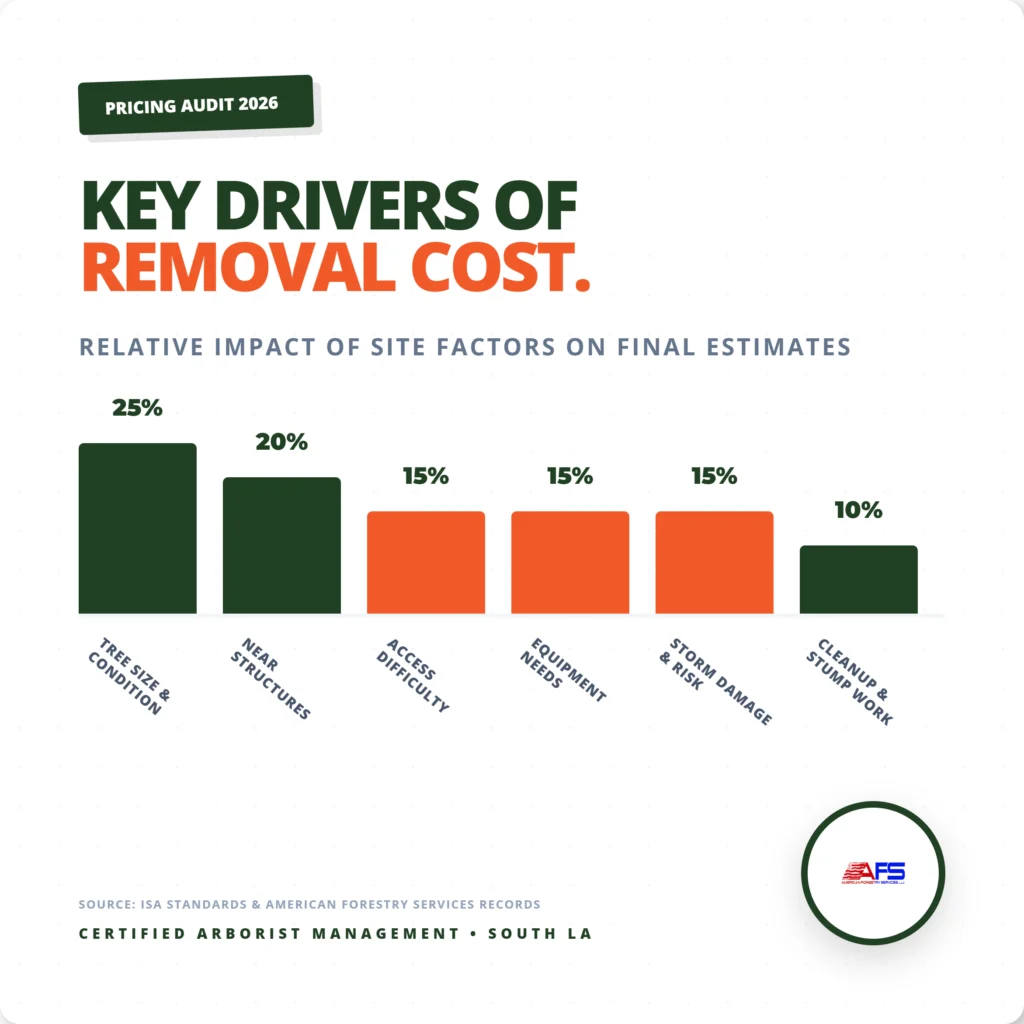
Most people assume that tree removal costs come down to one thing: how big the tree is. That is only part of the picture. When we price a removal job, we look at how risky the work is, how easy it is to access the tree, and how much labor, equipment, rigging, and cleanup the full scope requires. Two trees that look similar from the street can become very different jobs once we see the site in person.
If you are dealing with a hazardous or unwanted tree, you can review our professional tree removal services to see how we approach planning, safety, removal, and cleanup.
| Cost Driver | What Changes the Price | Why It Matters |
| Tree size | Height, canopy spread, trunk diameter, and wood weight | Larger trees usually take more labor, more time, and more equipment |
| Tree condition | Deadwood, decay, splits, lean, storm damage, or root instability | Compromised trees often require slower, more controlled removal |
| Location near structures | Rooflines, fences, driveways, garages, pools, and service lines | Limited drop zones increase rigging, planning, and property protection |
| Access difficulty | Narrow gates, tight side yards, soft ground, or limited rear access | Hard access can change equipment needs and extend job time |
| Equipment needs | Crane, lift, rigging gear, specialized saws, and protection materials | More equipment usually means more coordination and setup |
| Cleanup scope | Brush hauling, log handling, debris removal, and stump grinding | The amount of finish work changes the total scope |
| Timing | Planned work versus emergency storm response | Urgent jobs often involve more uncertainty and more risk |
Tree Size and Condition Are Major Cost Drivers
A healthy medium-sized tree in an open yard is a different job from a dead oak over a roof or a cracked pine after a storm. Larger trees usually take more time, more cuts, more rigging, and more cleanup. Condition matters just as much. Dead, hollow, split, leaning, or storm-stressed trees can fail in unpredictable ways. That forces us to slow down, adjust the removal sequence, and use more controlled handling.
That is one reason an on-site estimate matters. The safest plan is not always the fastest one. At American Forestry Services, we assess the tree first so we can recommend the safest and most practical way to get the work done.
Location on Your Property Can Raise or Lower the Price
Where the tree sits on your property can change the entire removal plan. A tree in the open is usually simpler than a tree boxed in by a roofline, fence, driveway, shed, pool, or utility corridor. When there is no safe laydown area, we may need to dismantle the tree in sections. That adds rigging, property protection, and more time on-site.
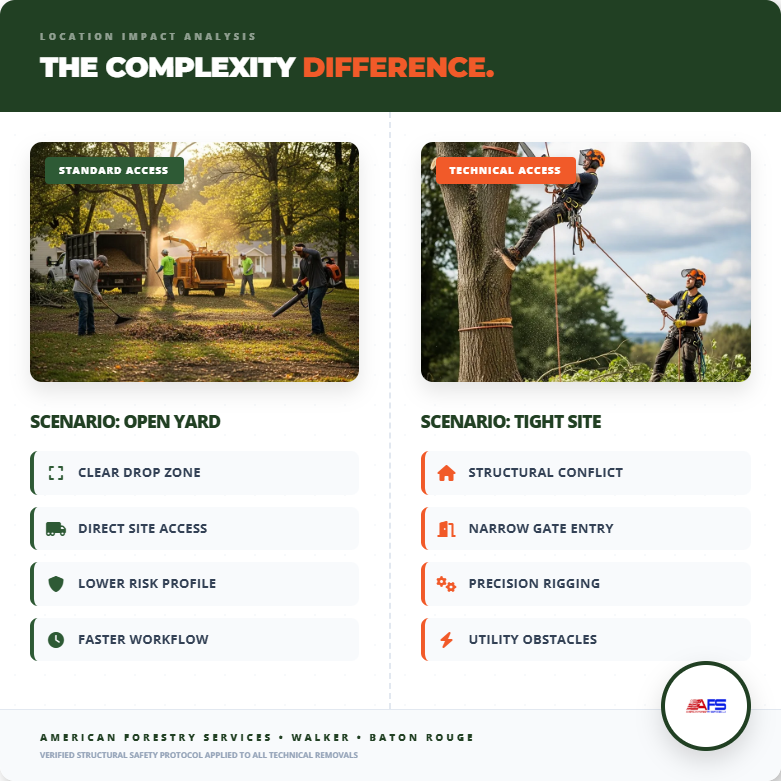
In many Baton Rouge-area neighborhoods, the surrounding property creates most of the complexity. A medium-sized tree over a fence and roof can be a harder job than a larger tree in an open lot.
Access Problems Often Change the Removal Method
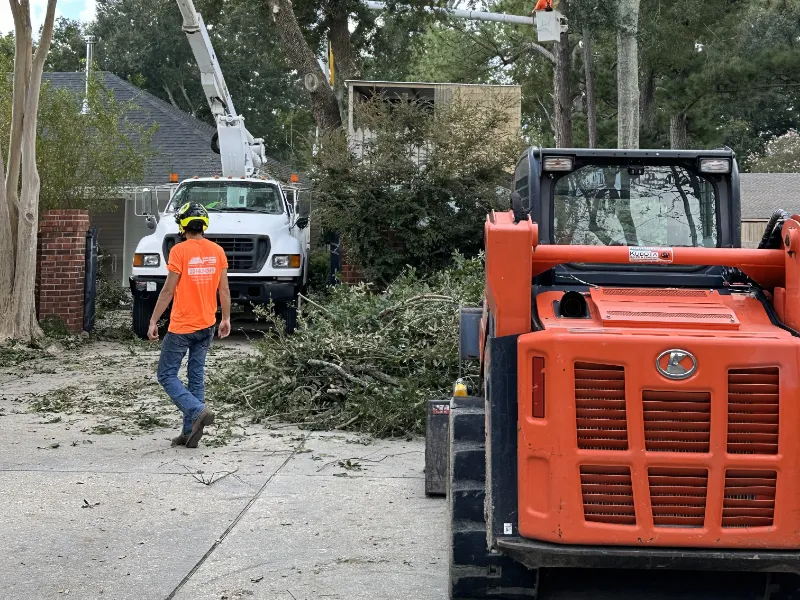
Sometimes the challenge is not the cutting. It is getting the right people and equipment into the right place without damaging the property. Narrow gates, tight side yards, soft ground, rear lot access, and landscaping obstacles all matter. If we cannot get equipment close to the work zone, the job often takes longer and requires more manual handling.
Access issues also affect setup. Turf protection, hardscape protection, staging space, and debris routing all add time and planning. If the site is hard to reach, the price usually reflects that added effort.
When Crane Work Changes the Job
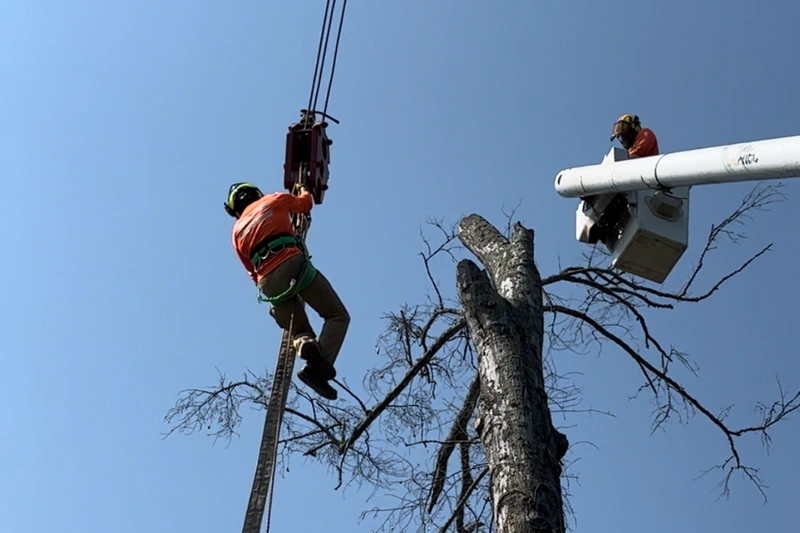
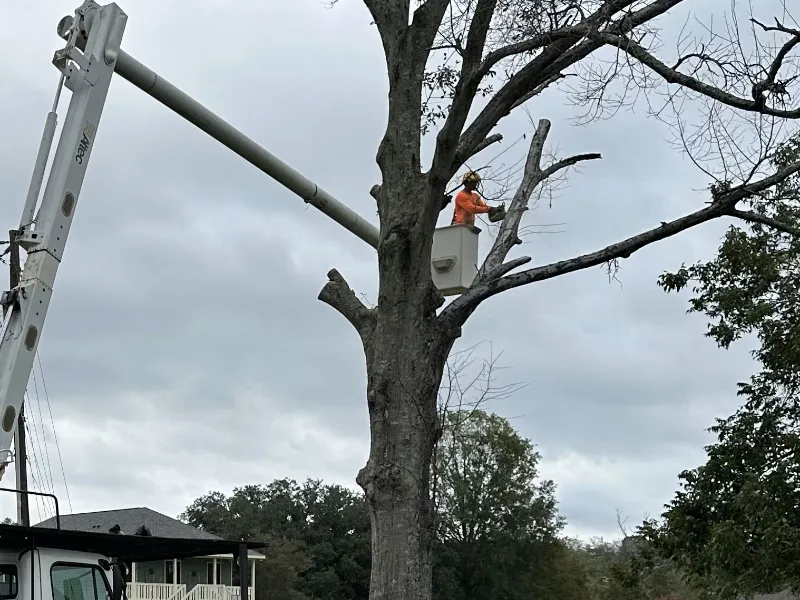
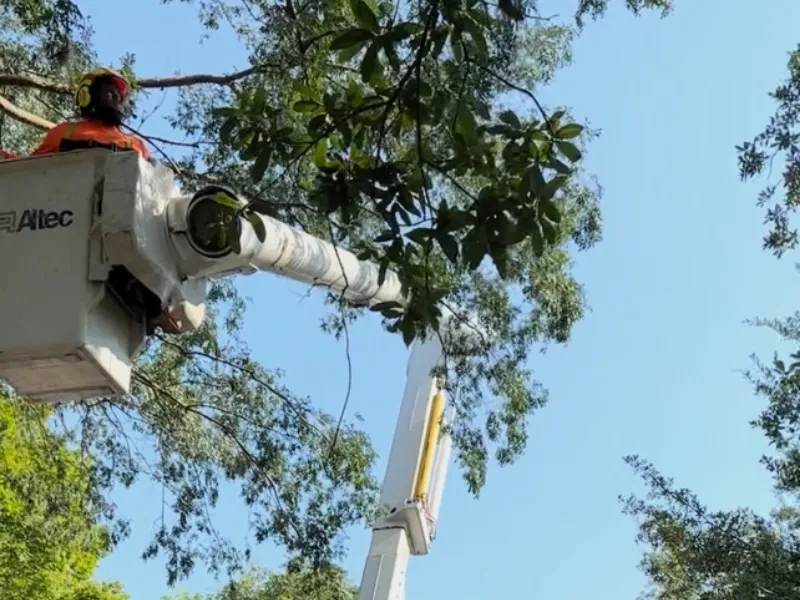
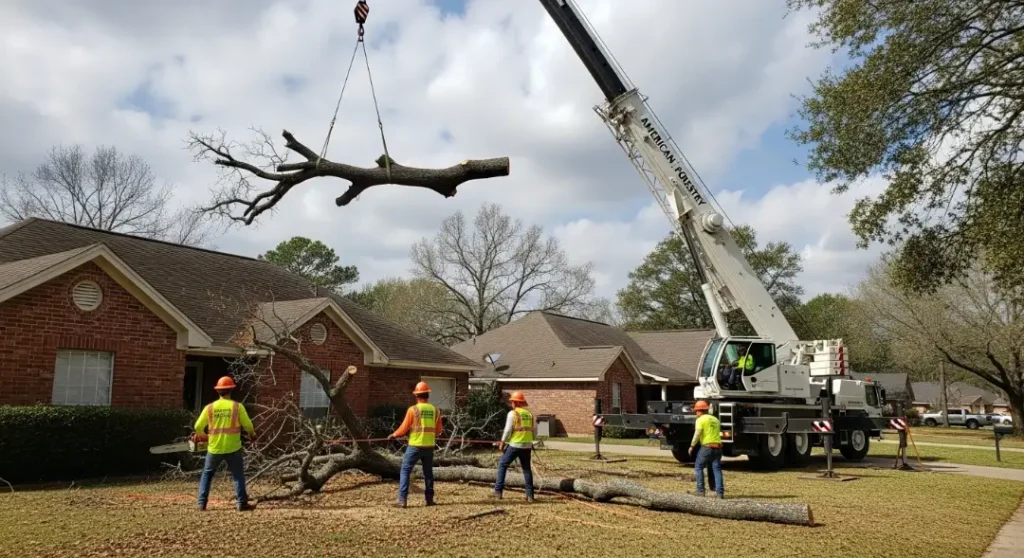
Crane-assisted removal is not needed on every job, but in the right situation, it can be the safest and cleanest option. We may recommend crane service when a tree is extremely large, unstable, close to structures, or difficult to remove safely with standard access and rigging. This often applies when the tree sits over a house, spans a driveway, leans toward a building, or leaves no safe drop zone.
Storm-Damaged Trees Usually Need More Careful Pricing
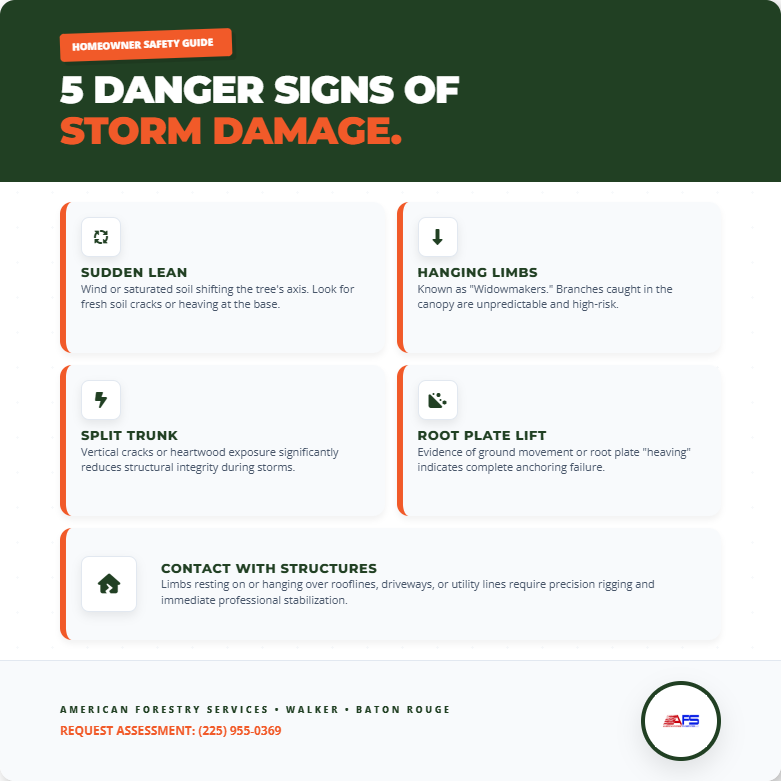
Storm damage can change the job fast. A tree that has been hit by wind, lightning, or saturated ground conditions may have hanging limbs, hidden cracks, root failure, or unstable lean. What looks like a simple cleanup from the ground may actually involve a high-risk removal with tensioned wood, suspended limbs, or compromised root support.
That matters in South Louisiana. Strong storms, hurricane season, and wet ground can all make a tree more dangerous to assess and remove. When we inspect storm-damaged trees, we look closely at lean, root movement, cracked attachment points, suspended limbs, and nearby structures before we recommend the safest next step.
Common Signs a Storm-Damaged Tree May Need Immediate Professional Review
- New lean after wind or heavy rain
- Split trunk or cracked major limbs
- Hanging branches over the house, driveway, or yard
- Exposed or lifted roots
- Tree contact with service lines or utility clearance areas
- Fresh soil movement around the base
Cleanup, Hauling, and Stump Grinding Affect the Total Scope
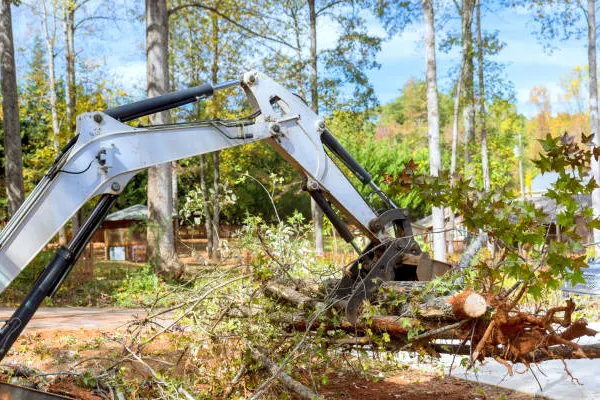
Removing the tree is only part of the work. The final price may also depend on what happens to the limbs, logs, brush, and stump after removal. Some property owners want everything hauled away. Others want wood cut and stacked on-site. Some want a full finish so the property looks clean the same day. Stump grinding can also be added if you want the area cleared for mowing, replanting, or future use.
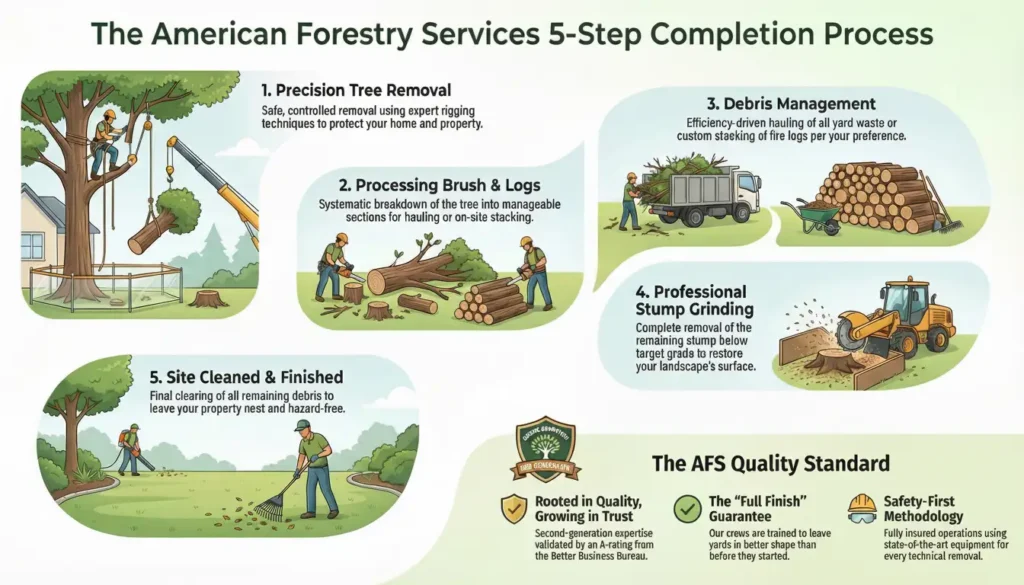
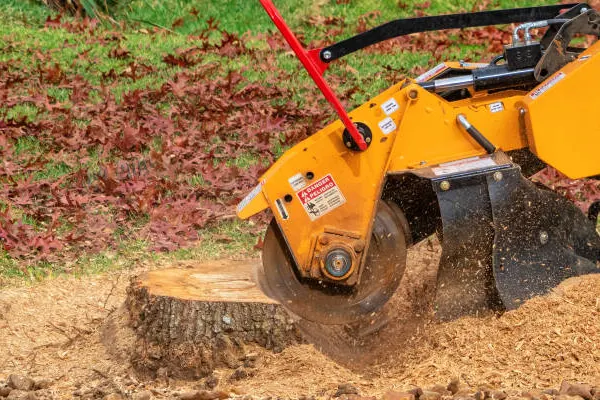
If you want the job finished more completely, ask us about stump grinding and removal during the estimate instead of treating it as a separate project later. If storm debris or brush volume is part of the job, our debris removal services may also affect the final scope of work.
| Cleanup Option | What Is Included | How It Affects Scope |
| Basic removal | The tree is removed, and standard debris handling is completed | Lowest finish level |
| Full haul-off | Brush, logs, and loose debris are loaded and hauled away | Adds labor, loading, and disposal time |
| Wood left on-site | Logs are cut and staged for the property owner | May reduce hauling, but still requires processing time |
| Stump grinding added | The remaining stump is ground below the target grade | Adds equipment, time, and cleanup |
| Full finish | Removal, haul-off, stump work, and final site cleanup | Most complete result and widest scope |
Emergency Removal Versus Planned Removal
A scheduled removal and an emergency removal are not the same kind of job. Planned removals give us time to inspect the tree, stage equipment, coordinate access, and work in a more controlled sequence. Emergency calls often involve blocked driveways, fresh storm debris, unstable trees, or immediate hazards near structures. That adds urgency, uncertainty, and often more risk.
| Job Type | Typical Conditions | What Usually Changes |
| Planned removal | Stable site, normal scheduling, and full site review | Better staging, lower uncertainty, and a more predictable workflow |
| Emergency removal | Storm damage, blocked access, new lean, or immediate hazard | More risk review, more caution, faster mobilization, and less predictability |
Why a Phone Quote Is Usually Not the Real Number
A rough phone estimate may sound convenient, but it rarely tells the full story. Photos and short descriptions can help start the conversation, but they do not always reveal hidden decay, access limitations, roof conflicts, root plate movement, soft ground, or the actual cleanup scope. A tree may look simple in one picture and become a different job entirely once we see the site in person.
That is why we prefer to look at the actual tree, the property, and the risks before we give you a firm scope. It gives you a more realistic estimate and a clearer plan.
Quick Checklist: What to Have Ready Before a Tree Removal Estimate
- The property address and the best contact number
- Photos of the tree from more than one angle, if you have them
- Notes about recent storm damage or movement
- Access details such as gates, fences, narrow side yards, or soft ground
- Your preference on haul-off, wood stacking, and stump grinding
- Any concerns about nearby structures, lines, or drainage areas
Common Mistakes That Make Tree Removal More Expensive
- Waiting until storm damage gets worse before calling
- Ignoring access problems until the crew arrives
- Assuming cleanup and stump grinding are always included
- Trying partial do-it-yourself cutting before professional removal
- Comparing phone quotes as if they reflect the same scope
What to Expect During an On-Site Tree Removal Estimate
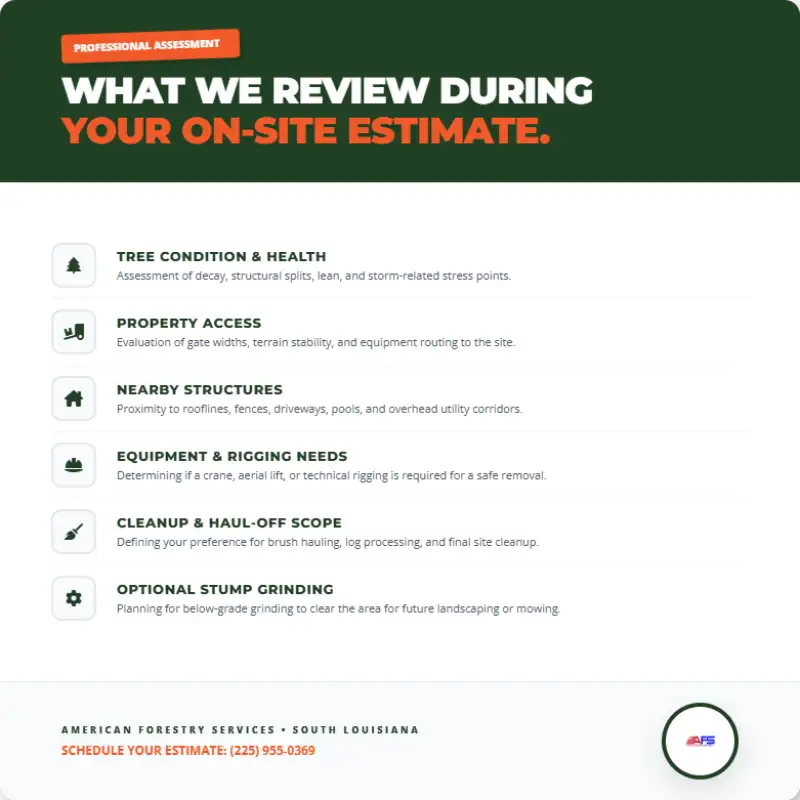
A good estimate should do more than give you a number. We review tree condition, surrounding structures, access points, equipment needs, cleanup scope, and optional items such as stump grinding. We explain the likely removal method, the main risk factors, and the final scope. That gives you a clearer basis for comparing quotes and making a decision.
If the tree may still be salvageable, a tree health inspection can help determine if removal is the right next step or if another service makes more sense.
Get a Tree Removal Estimate in Walker or Greater Baton Rouge
If you are dealing with a hazardous, unwanted, or storm-damaged tree, the best next step is an on-site assessment. At American Forestry Services, we work with residential, commercial, and municipal clients in Walker, Baton Rouge, Denham Springs, Livingston Parish, and nearby communities. If you need a clear plan for safe removal, cleanup, and next steps, we can review the site and provide a scope tailored to the job at hand.
Frequently Asked Questions About Tree Removal Cost
These are the questions we hear most often once property owners realize tree removal pricing depends on more than tree height. The answers below explain why one estimate may differ from another and what you should expect during the review process.
Why can two tree removal estimates be very different?
Two tree removal jobs can look similar from the street but involve very different risks, access limits, equipment needs, and cleanup scope. A tree in an open yard is usually simpler than a damaged tree near a house, fence, driveway, or service line. The removal method, protection steps, and finish level all affect the final estimate.
Does a tree near a house cost more to remove?
Often, yes. Trees near roofs, fences, garages, pools, and driveways usually require more careful rigging, slower sectioning, and stronger property protection measures. That added control takes more labor and planning. Even a medium-sized tree can become a more technical and higher-scope job when structures limit the drop zone.
Is storm-damaged tree removal more expensive?
It can be. Storm-damaged trees may have hanging limbs, split trunks, unstable lean, or lifted roots, making the work more hazardous and less predictable than a planned removal. Emergency timing can also affect the job. We often need to move more carefully and use more controlled removal methods in those conditions.
Should I bundle stump grinding with tree removal?
In many cases, yes. Bundling stump grinding with removal can save time and deliver a cleaner finished result, especially if you want the area ready for mowing, landscaping, or future use. It also helps define the full scope of work up front rather than splitting the work into separate visits later.
When is a crane needed for tree removal?
A crane may be the best option when a tree is large, unstable, close to structures, or difficult to remove safely with standard access and rigging. This often applies when there is no safe laydown area or when the tree extends over a roof, driveway, fence, or landscaped area that needs added protection.
Can a tree health inspection help before I decide to remove a tree?
Yes. If the tree still has value and the problem is not obvious, an inspection can help determine if pruning, support work, or monitoring makes more sense than full removal. That is especially useful for mature trees with structural concerns, storm stress, or symptoms that may not automatically require removal.
If you want a clear answer based on the actual tree, the best next step is to schedule an estimate and get a site-specific scope rather than relying on rough online averages.