

How to Get Your Trees Storm-Ready Before the Wind Arrives
Quick Answer: The best hurricane tree prep happens before the season peaks. Walk your property for hazard signs like dead limbs, trunk cracks, mushrooms at the base, and leaning trunks. Have a certified arborist thin dense canopies to reduce wind load, and never top a tree, which makes it more dangerous. Atlantic hurricane season runs June 1 to November 30, so spring and early summer are the time to act.
TLDR:
- Atlantic hurricane season runs June 1 to November 30 and peaks around September 10, so inspect and prune well before then.
- Hazard signs to look for: large dead limbs, trunk cracks, missing bark or oozing sap, mushrooms or conks at the base or roots, and a leaning trunk.
- Proper pruning thins the canopy to let wind pass through. Topping a tree removes too much crown and makes it more hazardous, not less.
- Gulf South trees vary in wind resistance. Live oak and bald cypress hold up well; water oak, laurel oak, and sand pine fail more often.
- There is no wind-proof tree, but a properly pruned, healthy tree survives storms far better than a neglected one.
- Leave broken or hanging limbs, overhead chainsaw work, and anything near power lines to a certified arborist.
Which of your trees is most likely to come down in the next storm? For Walker and Livingston Parish homeowners, that is the question worth answering in the spring, not during a warning. The National Hurricane Center notes the Atlantic hurricane season runs June 1 to November 30, peaking around September 10, and the work that protects your home has to be done before the wind shows up.
Louisiana gives trees plenty of chances to fail. Saturated soil, sudden high wind, and decades of heavy canopy growth are a bad combination. The good news is that most tree failures are predictable, and a healthy, properly pruned tree stands up to a storm far better than a neglected one. American Forestry Services helps homeowners across Livingston Parish get ahead of the season.
Worried about a tree near your house? Request a free tree assessment, or call or text (225) 955-0369.
Why Pre-Season Prep Beats Storm Cleanup
The cheapest tree work is the work you do before a storm, not the emergency call after one. Timing is the whole game.
Once a named storm is in the Gulf, it is too late to safely prune, and every arborist in the parish is booked. The LSU AgCenter frames tree inspection as something to do before peak hurricane season arrives, giving you time to remove problem limbs on your schedule instead of the storm’s. Fresh pruning cuts also need time, and doing heavy work right before high wind is its own hazard.
Prep is about reducing the odds. You cannot make a tree invincible, but you can remove the dead wood, thin the canopy, and deal with the obviously failing tree while conditions are calm. That is the difference between a few branches down and a tree through your roof.
The Warning Signs of a Hazard Tree
Most trees tell you they are in trouble before they fail. Learning the signs turns a vague worry into a clear checklist.
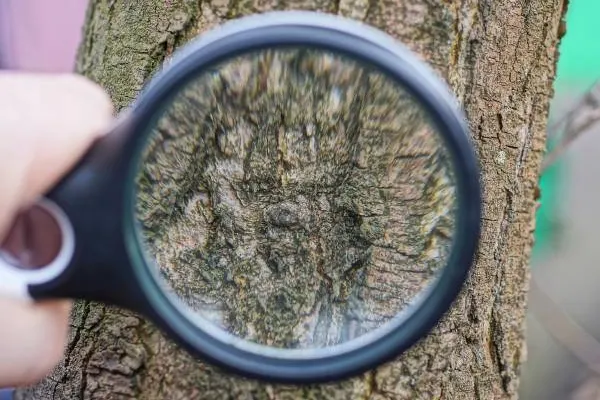
The LSU AgCenter’s pre-hurricane tree checkup guidance points to several red flags: large dead limbs in the canopy, cracks running vertically or horizontally in the trunk, missing patches of bark or oozing sap, and the presence of fungi such as mushrooms or conks. Mushrooms at the base or over the roots are an especially bad sign, since they signal internal decay. A tree leaning more than it used to, or with cracked soil heaving on one side of the base, is another warning.
Co-dominant stems are a hidden risk worth knowing. When two trunks of similar size join in a tight V with bark trapped in the crotch, that union is weak and prone to splitting in wind. If you see any of these signs on a large tree near your house, that is the tree to have looked at first. Our guide on why regular tree trimming is essential in the Baton Rouge area covers how routine care catches these problems early.
Prune to Reduce Wind Load, Never Top
Pruning is the single most effective storm-prep step, but only when it is done right. Done wrong, it makes a tree more dangerous.
The goal is to thin the canopy so wind passes through instead of pushing against a dense wall of leaves. University of Florida IFAS research, part of a program that studied ten hurricanes, found that pruning gives trees more wind resistance and should be considered an important practice for tree health and storm survival. Proper structural pruning removes dead wood and lightens the ends of heavy limbs while keeping the tree’s natural shape.
Topping is the opposite, and it backfires. Cutting a tree’s crown back to stubs removes most of its leaf area, starves it, and forces weak regrowth that breaks off easily. As the arboriculture consensus summarized by University of California ANR explains, topping makes a tree more hazardous over time and does not reduce its risk. A topped tree is a future storm problem, which is why a real arborist will never do it.
Which Gulf South Trees Fail Most in Wind
Not every tree carries the same risk. Knowing your species helps you prioritize which trees to inspect and protect.
University of Florida IFAS wind-resistance research, directly relevant to our Gulf climate, ranks species by how they held up in hurricanes. Among the most wind-resistant are live oak, sand live oak, southern magnolia, and bald cypress. Among the least wind-resistant are water oak, laurel oak, and sand pine. That matters here, because water oaks are common in the Baton Rouge area and are more likely to drop limbs or fail outright.
| Wind resistance | Common Gulf South trees |
|---|---|
| Higher (hold up well) | Live oak, sand live oak, southern magnolia, bald cypress, pondcypress |
| Lower (fail more often) | Water oak, laurel oak, sand pine |
The lesson is not to remove every water oak. It is to give the lower-resistance species near your home closer attention and earlier inspection. The same research is blunt that there is no such thing as a wind-proof tree, so even a live oak with structural defects needs care.
When to Handle It Yourself and When to Call a Pro
Some tree prep is a homeowner job. A lot of it is not, and the line matters for your safety.
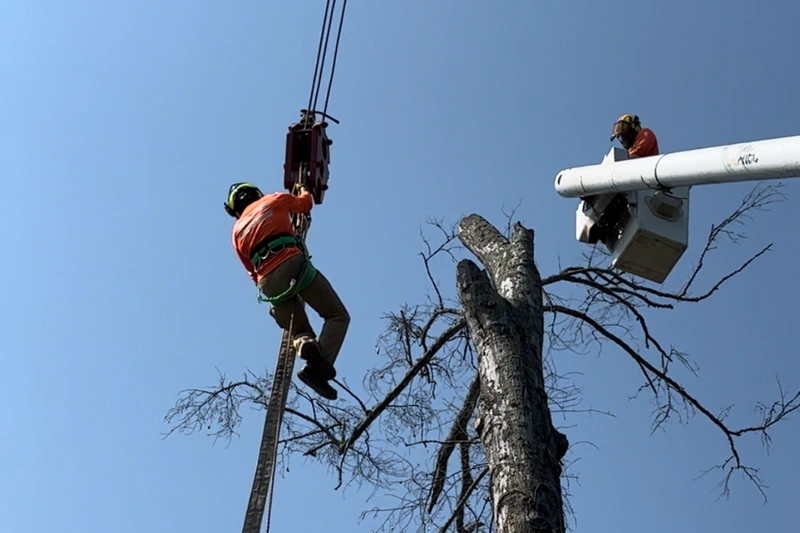
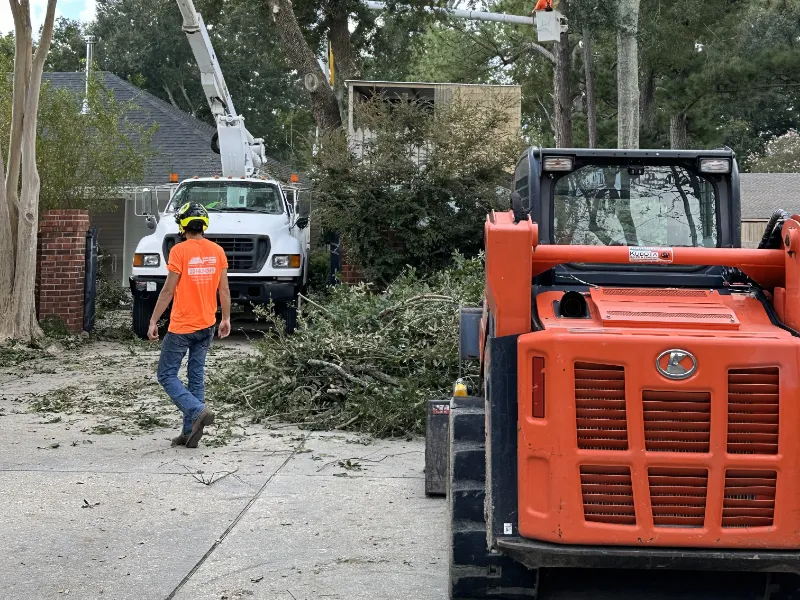
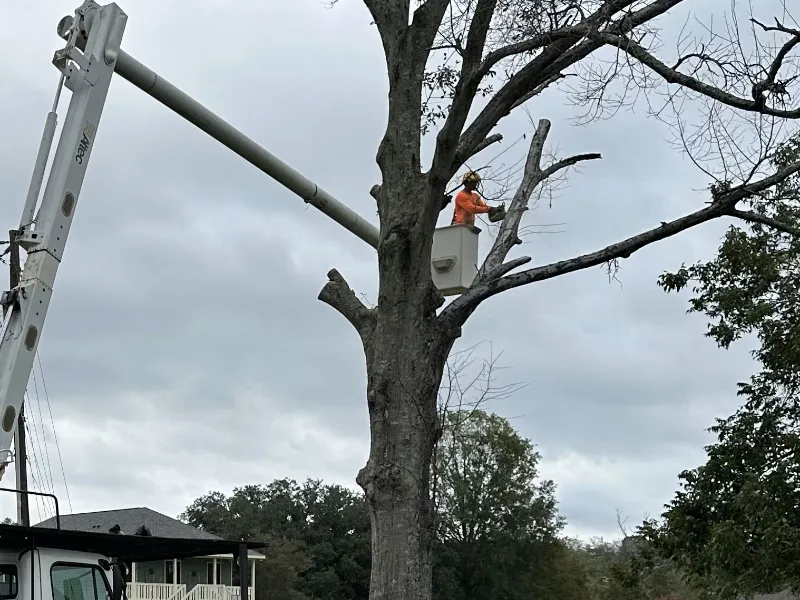
Raking, picking up small deadfall, and watering are fine to do yourself. But the LSU AgCenter is direct that if large limbs are broken or hanging, or if high climbing or overhead chainsaw work is needed, a professional arborist should do the work. Big limbs are heavy, ladders and chainsaws are a dangerous mix, and a mistake near the house is worse than the tree ever was.
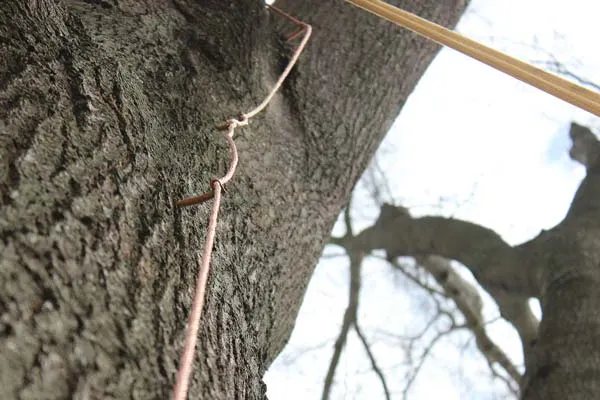
Older, mature trees deserve a professional eye regardless of history. A certified arborist can assess structural defects you cannot see from the ground and recommend whether a tree needs pruning, cabling, or removal. If a hazard tree is too close to your house to fail safely, our tree removal service for Walker and Baton Rouge can take it down before the storm does.
Staying Safe After the Storm
Prep is half the job. Knowing what not to touch after a storm is the other half, and it saves lives every hurricane season.
Treat every downed line as live. The LSU AgCenter warns to stay away from downed power lines and to remember that even low-voltage phone, cable, and fence wires can become energized. Never assume a line is dead because it is not sparking.
Storm-damaged wood is also unpredictable. Broken limbs hung up in a canopy, so-called widow-makers, and limbs under spring tension can fall or snap back violently when disturbed. The Texas A&M Forest Service cautions that tensioned storm wood can spring back when cut, so tangled or tensioned limbs are a job for a trained crew with the right equipment, not a homeowner with a chainsaw.
Common Questions About Hurricane Tree Prep in Louisiana
These are the questions Walker and Livingston Parish homeowners ask most before hurricane season. The short version is that healthy, properly pruned trees survive storms far better, and the work must happen before the wind arrives. The answers below cover the details.
When should I prune my trees for hurricane season?
Prune before the season peaks, ideally in spring or early summer. Atlantic hurricane season runs June 1 to November 30 and peaks around mid-September, so earlier is better. Avoid heavy pruning once a named storm is approaching, since fresh cuts, falling debris, and no time to finish safely make last-minute work its own hazard.
What are the signs my tree could fall in a storm?
Look for large dead limbs, cracks in the trunk, missing bark or oozing sap, mushrooms or conks at the base or roots, and a trunk that leans more than it used to. Tight V-shaped unions between two similar trunks are also weak points. Any of these on a large tree near your house means it is worth a professional inspection.
Does topping a tree make it safer in a hurricane?
No, it does the opposite. Topping removes most of the crown, starves the tree, and forces weak regrowth that breaks easily, making the tree more hazardous over time. Proper storm pruning thins the canopy to reduce wind load while keeping the tree’s structure. A qualified arborist will thin, never top.
Which trees are most likely to fail in high wind?
University of Florida research relevant to the Gulf South ranks water oak, laurel oak, and sand pine among the least wind-resistant, while live oak, southern magnolia, and bald cypress hold up well. Water oaks are common around Baton Rouge, so those deserve earlier inspection. Still, no tree is truly wind-proof, so any tree with defects needs attention.
Can I prune large storm-risk limbs myself?
Small deadfall and light pruning are fine, but the LSU AgCenter recommends leaving broken or hanging large limbs, high climbing, and overhead chainsaw work to a professional arborist. The risk of injury near a house is high, and storm-damaged wood under tension can snap back when cut. When in doubt, call a certified arborist.
What should I do about downed limbs and lines after a storm?
Stay away from all downed lines and treat them as energized, including phone, cable, and fence wires. Do not cut limbs tangled in lines or under tension, since they can spring back. Clear only small, ground-level debris yourself and leave hanging limbs and large removals to a trained crew.
Related guides from American Forestry Services:
- Tree Service in Walker, LA and Livingston Parish. What full-service tree care covers in our area.
- When Tree Removal Requires a Crane. For the big hazard trees too close to the house.
- Tree Removal Cost in Walker and Baton Rouge. What it costs to take down a storm-risk tree.
Do not wait for the forecast to deal with a risky tree. American Forestry Services inspects, prunes, and removes hazard trees across Walker, Livingston Parish, and the Baton Rouge area, so your property is ready before the next storm rolls in.